October 27, 2026
How Do You Find Where Rats Are Getting Into Your House
Finding rat entry points is detective work, not guesswork. Rats follow the same routes night after night, and they leave signs along those routes. Droppings, rub marks, gnaw marks, and sounds all point toward the gaps they use. This post walks through how to trace those signs from inside the house to the gap outside, and how rats get into the house in the first place.
Start inside, where the signs are, then work outward to the exterior. The entry point is usually close to where the strongest signs are, not on the opposite side of the house.
Start Inside: Follow the Signs
Begin where you have seen droppings, heard scratching, or found gnawed food packaging. Rats travel along edges, so check where walls meet floors, behind appliances, under sinks, and along attic beams. Droppings clustered in one area suggest a nearby route, while droppings spread thinly across many rooms suggest rats have been active for a while.
Look for rub marks too. Rats have oily fur, and repeated travel along the same beam, pipe, or wall edge leaves dark, greasy smears. A rub mark leading to a pipe opening or a corner of the attic often marks the path rats take between nesting and feeding areas. Note where the marks lead, since that direction usually points toward the entry point.
Check the Outside From the Ground Up
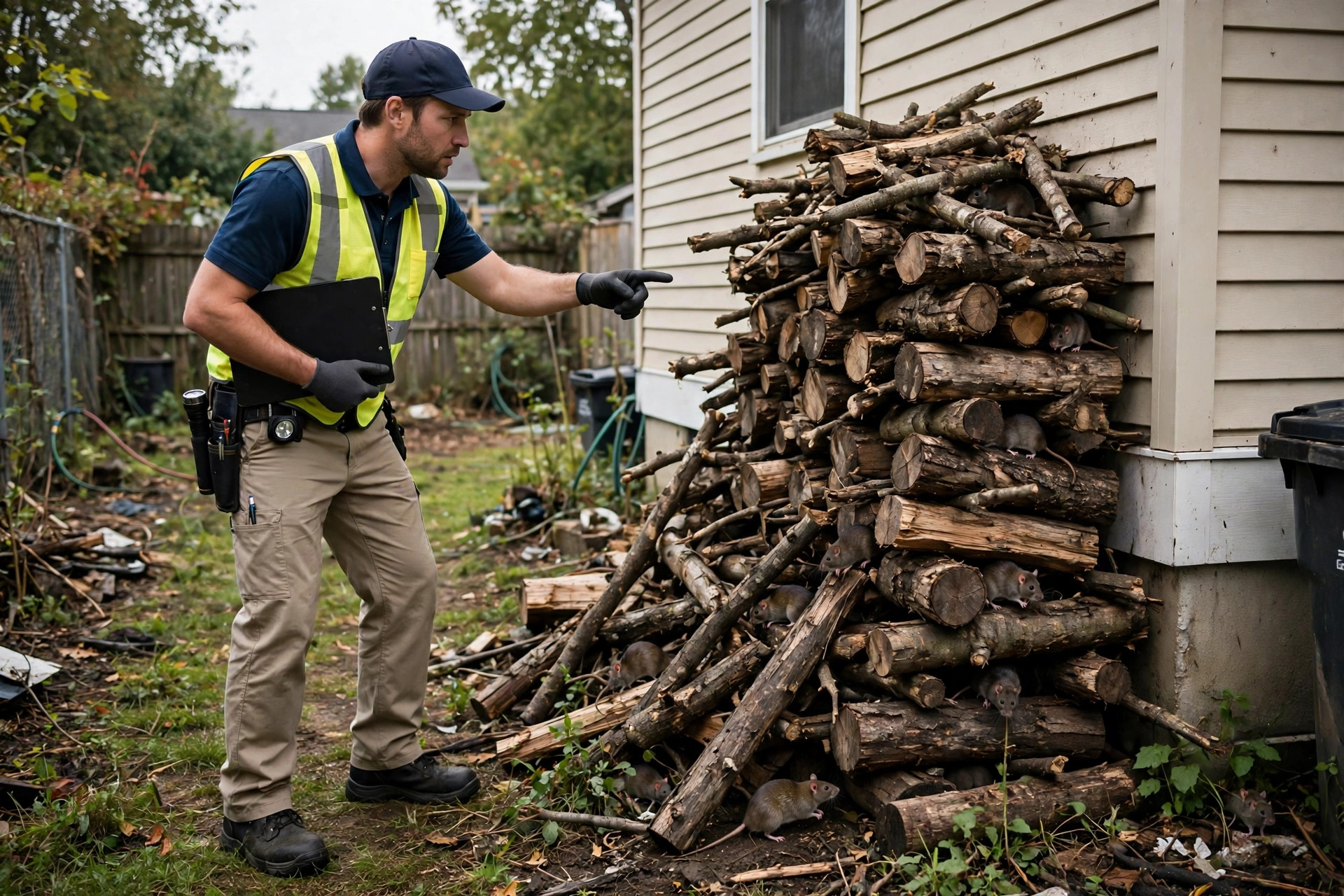
Outside, work from the foundation upward. Check where pipes, wires, and vents pass through the walls, and look at the foundation line for gaps where siding meets concrete. Garage doors, basement windows, and crawlspace vents are common weak spots, especially when seals have worn or vent covers have loosened.
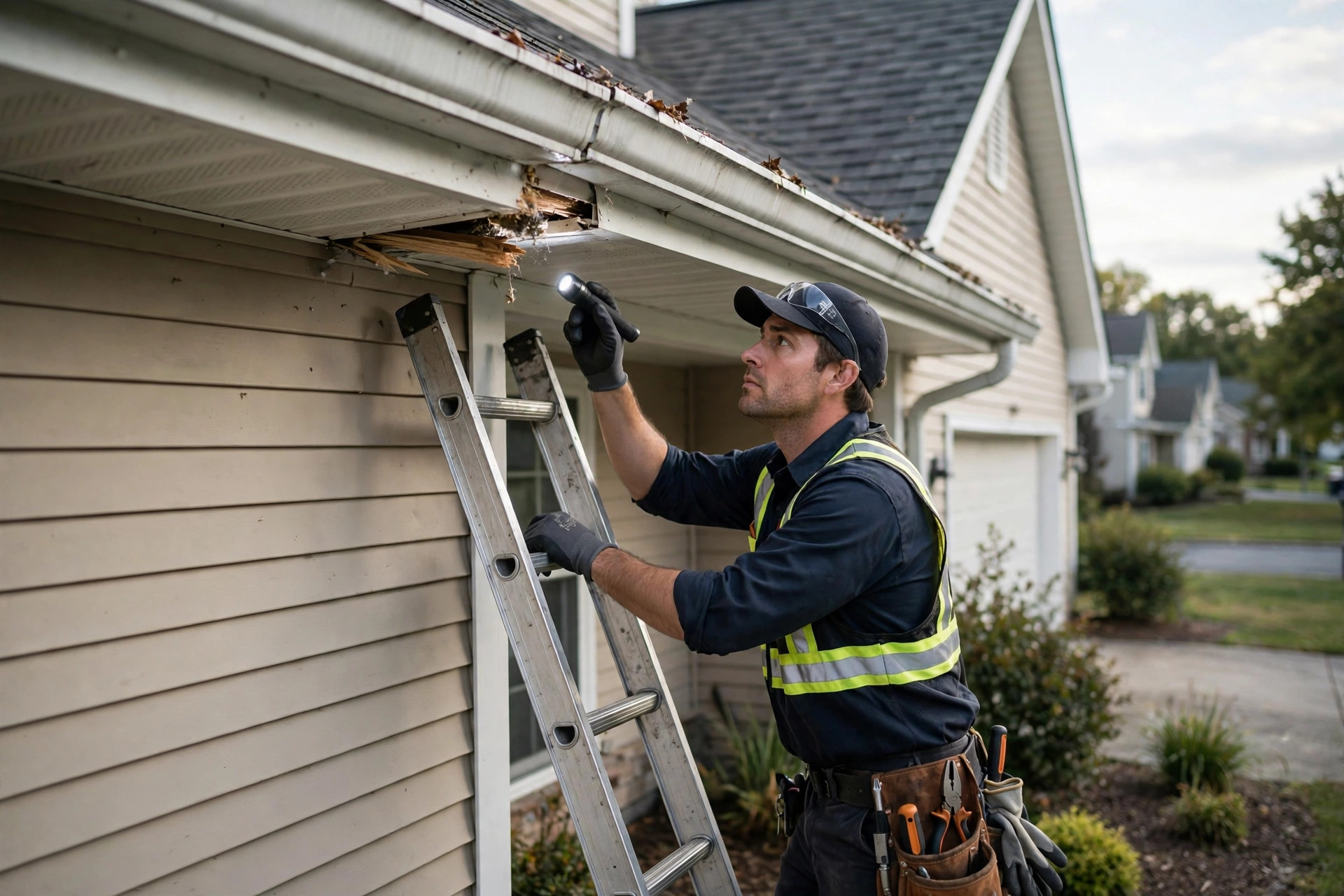
Then look higher. Roof rats climb, so the roofline matters as much as the foundation. Check where the roof meets the walls, around vents and chimney flashing, and where tree branches or vines touch the house. A branch that touches the roof is a bridge, and rats use it the way people use a front path. University of California pest management guidance on rats describes roof rat climbing habits and why high entry points matter.
Common Rat Entry Points in Puyallup Homes
- Gaps around pipes, wires, and conduits entering the house
- Damaged or missing vent covers on attics, crawlspaces, and dryers
- Gaps where the roofline, eaves, or fascia boards meet the walls
- Worn garage door seals and gaps under side doors
- Openings where siding meets the foundation or a deck
- Chimney gaps and uncapped openings rats can climb into
- Crawlspace access doors that no longer close tightly
How Rats Get Into the House Through Small Gaps
Rats can squeeze through gaps that look far too small for them. Their skulls are narrow and their bodies are flexible, so a gap that seems minor to a person can be a doorway to a rat. That is why a visual check from a distance misses entry points. Gaps need a close look, and every pipe, vent, and joint needs checking, not just the obvious holes.
Also check at night if you can. Rats are active after dark, and listening for where sounds start and stop inside a wall can narrow the search to one section of the house before you ever go outside.
What an Inspection Adds
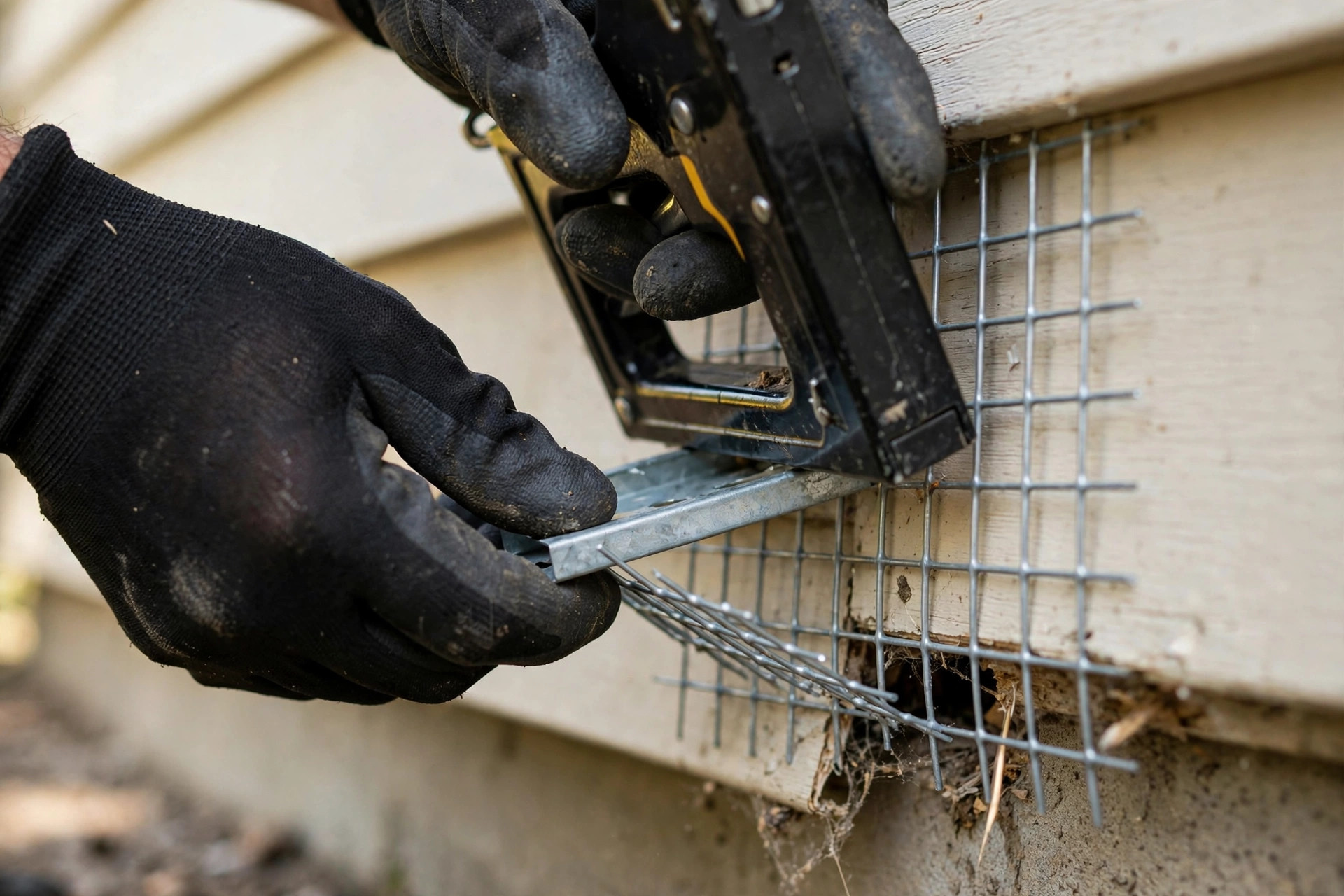
A homeowner check finds many entry points, but some are hidden behind insulation, inside wall voids, or high on a roofline that is unsafe to climb. A rodent inspection covers those spots with ladders and lights, and it ties the inside signs to the outside gaps so the sealing plan matches the actual routes. Once the gaps are mapped, rodent exclusion closes them, and our post on why rats keep coming back explains why sealing matters after trapping. If you have found signs but not the gap, contact Puyallup Rodent Pros for an inspection.
Puyallup Rodent Pros, 8417 Canyon Rd E, Puyallup, WA 98371, USA. Call (253) 452-0383.